 Follow
HÃPTICO
Acousmatic piece
Innateness is Modular
For Oboe, Clarinet/Bass Clarinet, Trumpet, Lap-Steel Guitar, Percussion.
Kuanasi-Uato
For Flute, Clarinet, Violin, Violoncello and Piano
Bisbiglio qualcosa nel mio orecchio
For 6 Poets, 6 whisperers, Voice, Saxophone, Accordion, Electric Guitar, Percussion and Piano
A rehearsal of the piece:
The concert:
“Bisbligio qualcosa nel mio orrechio” is a piece that explores four fundamental aspects of music creation: Trans-disciplinary collaboration and co-creation. The role of oral music transmission in contemporary music. The ability of the musicians to improvise and react to spoken language, not just the writing one. Creating creative collaboration networks.
The mechanics of the piece: Three Mexican writers were asked by the composer to invite three other writers who did not know the composer. Each one wrote a poem / text for one specific instrument. The composer adapted the poems into music instructions and determined the structure of the piece. Then we asked six people (musicians and no non-musicians) to become the whisperers.The whisperers will read the adapted text to the ears of the musicians via microphones connected directly to headphones used by the performers. “Bisbligio qualcosa nel mio orrechio” investigates new forms of music transmission and musical creation strategies where musicians and non-musicians come together to create music.
“Bisbligio qualcosa nel mio orrechio” explores the possibility to liberate the musician from the visual aspect of the traditional score to focus on sound aural perception as a trigger of imagination. This interactions hopefully will result in sonic relation to others in a collective creative community. Bisbiglio’s music is the sum of the imagination of nineteen people. Special thanks to all the people that make this piece possible, poets/writers, whisperers and performers.
Writers and Poets:
Mónica Nepote (voice)
Olivia Gonzáles Zamarrón (guitar)
MarÃa Fernanda Galindo (saxophones)
Shaday Larios (Accordion)
Xitlalitl RodrÃguez Mendoza (Percussion)
Renée Isadora S. Pont (Piano)
Whisperers:
Filippo Perocco (Voice)
Guitar: Aylin B. Yildirim Tschoepe
Sax: Ian Power
Accordion: Daniel Aguirre Oteiza
Percussion: Rosario Hubert
Piano: Sofia Magkiriadou
Writers and Poets:
Mónica Nepote (voice)
Olivia Gonzáles Zamarrón (guitar)
MarÃa Fernanda Galindo (saxophones)
Shaday Larios (Accordion)
Xitlalitl RodrÃguez Mendoza (Percussion)
Renée Isadora S. Pont (Piano)
——–
NADIR
For a Creative Cellist, a Composer and a non-musician Collaborator
“NADIR” by Edgar Barroso and Ernesto RodrÃguez-Leal performed by Séverine Ballon from Edgar Barroso on Vimeo.
A collaboration between engineer Ernesto RodrÃguez-Leal, cellist Séverine Ballon and composer Edgar Barroso. This piece is design to be an open piece to share with performers. NADIR is mostly a graphic score where the cellist, the composer and a non-musician join together their ideas, their taste and their personalities to create a shared experience. In this version of the piece, the use of paper and origami techniques is of special importance. This is where Ernesto (an engineer) contributed to “prepare” the cello with paper “sordines”. The score was merely a starting point, but Séverine (cellist) actually made considerable changes to the score based on her own creative and improvisatory experience and aesthetic preferences. The idea behind NADIR is to have an exciter of creativity. Performers and collaborators can add electronics, interacting instruments, relationships with other arts, and anything they please. It is a sort of Open Source piece which is open to
people to use it. The only “suggestion” there is in the score is that they should involve at least one collaborator that is a nonmusician to the realization of the piece. The performer and collaborators can reduce, extend or fragment the piece as pleased. This is part of my research concerning transdisciplinary collaboration and open music/art creation. I would like to thank Séverine Ballon and Ernesto RodrÃguez-Leal very deeply for their amazing insights, creativity and enthusiasm to share. I hope we can collaborate many more times over many different projects.
———
Kuanasi Uato
For Flute, Clarinet, Violin, Cello and Piano.
Kuanasi Uato I by Edgar Barroso performed by Argento Ensemble at Harvard University – 2012 by edgarbarroso-4
Performed by: http://www.argentomusic.org/
Commissioned by the International Cervantino Festival based on the city of Guanajuato – Mexico. “Kuanasi Uato†comes from two words that formed the current name of this city: Kuanasï and Uato from the Purepecha language. The name means “hill of frogsâ€. It was given this name because for the ancient Purepechas, it seemed that they were shaped like frogs. Because of the geographical characteristics of the city, where you can only access the city going through tunnels, the contrast in environmental changes is dramatic. Therefore contrast is very important in the piece. Kuanasi Uato is made up of different materials that collide against one another, separated, incapable of mixing. Throughout the piece, sound starts modeling the interaction among these materials until they get trapped in a flow of events which overlap constantly. This overlapping of energies create a vocabulary of gestures that compose the entire energy profile of the piece. This energy, and this piece is a sort of melancholic homage to Guanajuato, where I did my undergraduate studies and where I have dear friends and family.
———
OVER-PROXIMITY
For Flute, Clarinet, Horn, Trombone, One Snare Drum, Two Maracas and Piano.

We are now so close to each other. Social networks have been sharing our lives, ideas, pictures, videos to the world since some years ago. These hyper-connectivity has created the possibility to maintain relationships that otherwise would not be possible, such as long distance relationships and online collaboration. Nonetheless, despite all these advantages, this over-proximity to our lives, has brought a new form of stress to society. What we published in these networks could make somebody else uncomfortable, upset, even miserable, and could be someone that you don’t even know. Your “happiness” expressed in your pictures, could be a trigger of someone else’s depression at the other side of the world. People are now comparing to one another constantly. This piece is an exploration of musical materials that are too close to each other, either rhythmically, energetically, or referring to pitch content. This piece is a personal reflection on the consequences that we produce when we published something on the web. The music material was created thinking in the Over-Proximity idea of having people looking at others people’s lives. A given in today’s world.
—————-
ATARAXIA
For Percussion and Live Electronics
Ataraxia (ἈταÏαξία “tranquilityâ€) is a Greek term used by Pyrrho and Epicurus for a lucid state, characterized by freedom from worry or any other preoccupation. In this piece, the aim is to convey a state of tranquility with a very smooth flow of energy coming from the percussionist. In the score, the performer is asked to think in terms of the practice of Tai-Chi, where acceleration is very controlled and energy is somewhat contempt. The electronics on the other hand, are representing the energy, that invisible vitality coming from very soft and controlled movements, this energy is invisible to our eyes but is all around us. The piece is a state of robust tranquility that derives from surrounding oneself with trustworthy and affectionate sound world “worthy of trustâ€, avoiding directionality and conflict. I am very luck to have Samuel Z. Salomon to premiere this piece, he really understood the piece right from the beginning and his incredible sensitivity and musicianship are truly remarkable.
UTTERANCE
For Bass-Baritone and One Speaker
www.edgarbarroso.net
—————–
“UTTERANCE”
For non-native speakers, utterance is a word that comes with a lot of confusing pronunciations, meanings and usages. This piece is an homage to a friend of mine who spent a long evening conversation explaining to me (and others) what is the meaning of the word Utterance and when it is a appropriate to use it. Is it pronunciation? Is it mention? Is it expression? Is it a style of communication? Is it all of them? Since Frank Wörner comes from Germany and I will soon move to Switzerland I decided to use German and English to convey distance from the absolute understanding of the word Utterance.
The piece is an absurd dialogue between the singer and a second character who is “inside†a single speaker and that will be interrupting and explaining the meaning of Utterance to Frank. The learning experience makes use of singing, speaking, laughing, shouting and what the performer feels at the moment of listening to what the speaker has to say. It has a controlled level of improvisation, making the piece be halfway into a small music theater monologue-dialogue between him and his many selves. An absurdist fiction that was not that far away from that original conversation among friends on the topic of Utterance.
—————-
NOEMATA
For Electric Guitar, Saxophone, Percussion and Piano
Performed by: Ensemble Nikel
Yaron Deutsch – Electric Guitar
Vincent Daoud – Saxophone
Tom De Cock – Percussion
Reto Staub – Piano
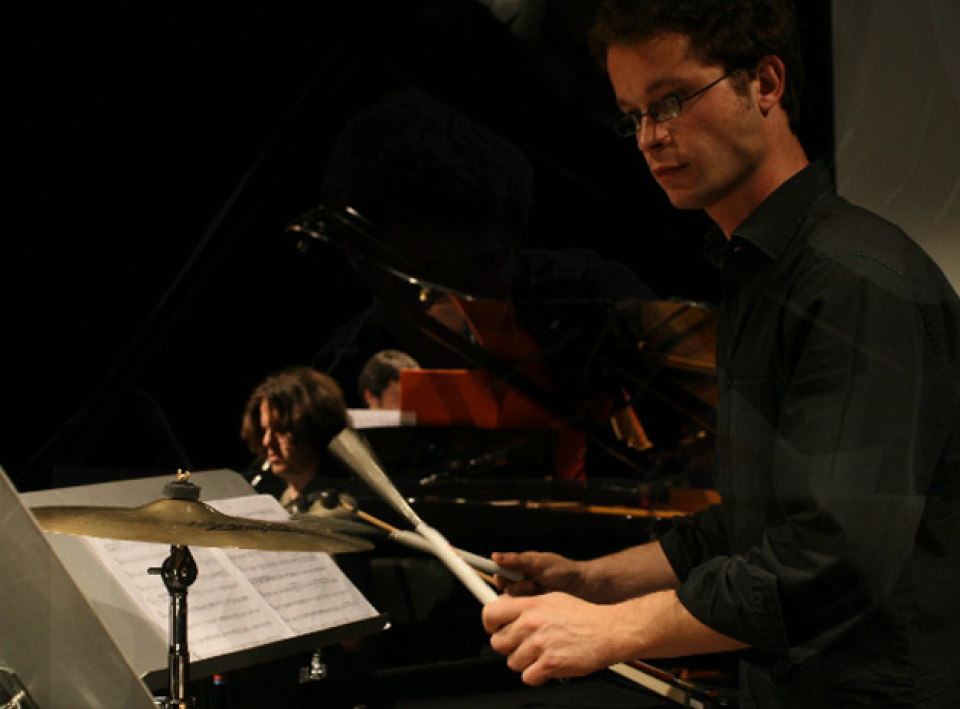
Disrupt, crack, break, interrupt, shapeless, timeless, corrupted, decadent, unbalance, confusing, disorderly, distracting, disturbing, obstreperous, problematize, troublesome, unruly, unsettling, upsetting. The list can go on forever. Recently, all of these terms are quite common in two contexts that are very familiar to me as a composer and as person. The first context is when talking and thinking about contemporary art and music. Standard vocabulary in an academic setting. Nonetheless, these terms started to appear in many of my day to day conversations in contemporary Mexico, where I’m a native and where all my family and many friends live.
The presence of Drug Cartels along with the constant threat to be black mailed or kidnapped along with the sense that nobody can realistically protect you or your family is quite unsettling and invariably creates anxiety. Like in a prehistoric jungle, the only possible thing to do is to hope that you or someone you love is not the next victim. Nothing more. These hopelessness brought the same vocabulary that was exclusive for my work as a composer and started to bother me quite a lot.
Therefore, I decided to eliminate these terms from my compositional process and instead, depart from ideas of reconciliation, continuity, shape, flow, stability, enjoyment. Simply create a place to shout my frustration of not being able to do anything about the situation and to be far away from people that I love. Right now, I really don’t feel like breaking anything, I feel like “repairing things†even though it comes from a broken-anxious and violent impulse. Noemata is the fourth of a series of pieces that take this approach to share at least in thought solidarity with my dear friends and family.
Disrupt, crack, break, interrupt, shapeless, timeless, corrupted, decadent, unbalance, confusing, disorderly, distracting, disturbing, obstreperous, problematize, troublesome, unruly, unsettling, upsetting. The list can go on forever. Recently, all of these terms are quite common in two contexts that are very familiar to me as a composer and as person. The first context is when talking and thinking about contemporary art and music. Standard vocabulary in an academic setting. Nonetheless, these terms started to appear in many of my day to day conversations in contemporary Mexico, where I’m a native and where all my family and many friends live.
The presence of Drug Cartels along with the constant threat to be black mailed or kidnapped along with the sense that nobody can realistically protect you or your family is quite unsettling and invariably creates anxiety. Like in a prehistoric jungle, the only possible thing to do is to hope that you or someone you love is not the next victim. Nothing more. These hopelessness brought the same vocabulary that was exclusive for my work as a composer and started to bother me quite a lot.
Therefore, I decided to eliminate these terms from my compositional process and instead, depart from ideas of reconciliation, continuity, shape, flow, stability, enjoyment. Simply create a place to shout my frustration of not being able to do anything about the situation and to be far away from people that I love. Right now, I really don’t feel like breaking anything, I feel like “repairing things†even though it comes from a broken-anxious and violent impulse. Noemata is the fourth of a series of pieces that take this approach to share at least in thought solidarity with my dear friends and family.
——————
AN INWARD FLOW
For Soprano, Saxophone and Live Electronics
Performed by:
Jennifer Ashe – Soprano
Philipp Stäudlin – Saxophone
Edgar Barroso – Live Electronics – Composition
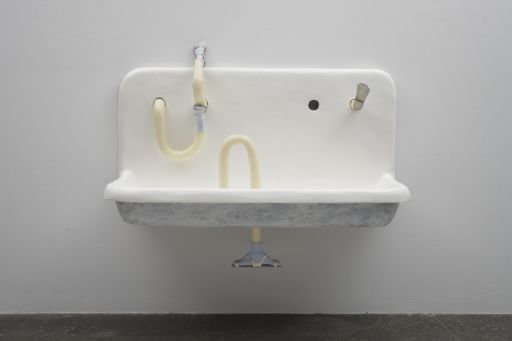
An-Inward-Flow-Live at the Sackler Museum – Harvard University by edgarbarroso_2
“An inward flow†is a piece inspired by “Untitled†by Robert Gober. The piece immediately caught my imagination as an object that is actively hiding a deep secret. It seems to me that the object somehow swallowed the little girl(s), they are sisters. Nonetheless, the intention of the sink is not to hurt the little girl(s), but to confine them into a space to resolve some issues between them, only then can they come out of it. In this piece, the “trapped†character(s) are played by a mezzosoprano. The sink on the other hand is represented by the saxophone and the resonant environment in which this objects are interacting is mainly assigned to the live electronics part. A fragmented/dislocated dialog between these sisters begin, the girl(s) “trapped†in the sink are forced to find a way out by resolving some issues between “themâ€. Presumably egoistic problems. In the process, they finding a huge conflict in communication and pretty much start a very hostile and hurtful dialogue. Could they stop being so full of themselves and free themselves from the sink?
SKETCHES OF BRIEFNESS
For Flute, Percussion, Piano, Violin, Viola, Cello and Double Bass.
Briefness is above, all a subjective and infinite term. How we divide time into sections, moments or actions is what defines our own tempo in life. Agendas, planners, calendars, watches, project managers, etc. They all are a sort of tools to divide time into short, medium and large chunks of time which define our business. Perhaps, we can think of them as different containers of sketches of what a day, month, year should be like and what has to be done within our chunks. In this piece the sketch of what is brief is what interests me. I deliberately didn’t connect the five sections that conform this piece, but I rather planned them as separate sketches of a (disconnected) larger piece. This piece is not finish, is just a quick way to record an idea for later I wanted to focus on a rapid freehand execution of sound and to keep the pureness of my train of thought assuming responsibility of all the pitfalls that this position (specially towards form) might have. After all, isn’t our perception of life a beautiful imaginary sketch?
METRIC EXPANSION OF SPACE
For Amplified Accordion
“Metric Expansion of Space” by Edgar Barroso, performed by Corrado Rojac from Edgar Barroso on Vimeo.
Metric Expansion of Space by Edgar Barroso, performed by Corrado Rojac by edgarbarroso_2
The metric expansion of space is the increase of distance between distant objects in a space that is constantly expanding, like the universe. Even though the universe is expanding, is not expanding into anything outside of itself. I imagine this expansion as very violent and extreme. The piece expands certain material into itself, a sort of a force that is trying to reach the unreachable, but has no place to go but to return to his own mass. With an obsessive obstinate rhythmic structure and with spasms of energy that revolves in its own velocity, range and capacity, the accordion becomes a machine which receives a non-stop stream of energy from the player. These bursts of energy can be measured between several nearby points in space with a very precise compositional strategy. The piece uses amplification as a continuation of the idea of being continuing expanding. I can’t think of a better performer than Corrado Rojac, he is energetic, precise and yet sensitive to convey the beauty raised from an obsessive behavior. We are very lucky to have him with us.
ENGRAMA
For String Quartet (Performed by the Diotima String Quartet)
“Engrama” for String Quartet by Edgar Barroso / The Diotima Quartet from Edgar Barroso on Vimeo.
BINARY OPPOSITION
For Video and Electroacoustic (4 channels)
Binary Opposition for Video and Electronics by Edgar Barroso from Edgar Barroso on Vimeo.
=========================================
Duality is one of the strongest concepts in life on this planet. The male-female dichotomy, Presence – Absence, Rational – Emotional, etc. are all concepts that help us have a starting point to make sense out of the rather infinite possibilities that emerge from a deceiving simple dual . Binary opposition is a piece that explores the interaction of stable and unstable materials that interact producing a set of possibilities that goes beyond the limited nature of their own. They are all affected by each other, and are also “invaded†by a disruptive characteristic of the frame space that speeds up the materials, similar to wind that provokes acceleration. Metaphorically: The actual weather of the frame.
==========================================
“Another noteworthy effort came from Harvard PhD candidate Edgar Barroso’s Binary Opposition (2010) for video and electronics. The piece began with the mysterious, vaguely ominous whispering of multiple speakers. In the video, a stark white stripe appeared across the screen and was intermittently invaded by specks and blotches of black. As this introduction ended, the sounds and images became more abstract. Sustained sections of foreboding repose were contrasted with short moments of intense agitation. Amid lacerating shards of noise, lifelike sounds were perceived in the distance, including the chirps of birds and the original whispering. At its climax, Binary Opposition reversed the pattern, sustaining the agitation and intermittently contrasting it with less saturated moments. A dark, contemplative stalking, just beneath the surface, underpinned this increased activity.
In conversation after the concert, Barroso revealed that the pathos in his recent works has been a reaction to the intense escalation of violence in his native Mexico. In a lesser composer’s hands, this profound angst might be rendered as avalanches of discordance, but Binary Opposition succeeds through its balance of contemplation and visceral anxiety. As Barroso explained in the program notes, dualities are “concepts that help us have a starting point to make sense out of the infinite possibilities that emerge from a deceiving simple dual.†Binary Opposition succeeds as a complex portrait of unease.”
David Dominique
IIIIIIIIIIIIIIII
Comment by Maura McDonnell in Visual Music on “Binary Opposition” by Edgar Barroso
This is a stunningly beautiful audiovisual work, that seems to reduce both aural and visual material to one thing, which is then used as material to craft a unified work that consists of aural and visual material. What I love about this piece, is its incredible sense of structure and development with visual and aural elements evolving over time into a variety of similar and dissimilar transformations – really engrossing work from start to finish.
————————————
NO-ISS-PA
For ensemble (Performed by Beta Collide 2010)
No-Iss-Pa by Edgar Barroso, performed by Beta Collide / Oregon Bach Festival by edgarbarroso_2
This piece is tribute to the endless quality of St. Matthew’s Passion introduction. the concatenation of melodies and pedal are somewhat overwhelming and continuously beautiful. The piece wants to explore the meta-space that Bach creates, where pretty much any sound can inhabit in his “rivers” of sound. It’s complexity allows to create different musical connections of any kind; silence, interruption, electronics, dissonance, etc. This piece is an homage to the composer, it reminds us that inside his music all musics can exist.
————————————
PYLON
For Percussion Quartet.
PYLON for Percussion Quartet by Edgar Barroso / Performed by TALUJON Percussion Quartet / April 24, 2010 – Harvard University from Edgar Barroso on Vimeo.
Pylon For Percussion Quartet by edgarbarroso
(Better if listen with headphones).
A pylon is a new typographic term introduced to define the missing areas of a stencil typeface. Ascenders, arms, crossbars, counters, spines, shoulders, tails, stems and spurs: altogether there are over 20 components in the anatomy of type. There remains a gap in the vocabulary of this most respected of crafts, however. In the designing or cutting of stencil letterforms, one is invariably brought to a point wherein the supporting canvas is joined to counter of the letter. Up until now, these supporting areas have gone without definition or label. A gross oversight by the standards of any industry, let alone one with as rich and respected a history as typography.
———————————————–
METAMORPHOSEON
For Six Singers
(Better if listen with headphones)
Written for the Neue Vocalisten Stuttgart this piece is a tribute to the old, to tragedy, to the slow movement of time when looked from a distance. The text is taken from the narrative poem Metamorphoseon (book 7) by Ovid. In this fragment, the narrator is describing the tragedy in which Cadmus is being transformed into a snake. While Cadmus was saying farewell to Harmonia, the metamorphoses into a snake is taking place. When he is completely transformed and therefore unable to say a word, Harmonia curses against the Gods, and ask them to transformed her also into a snake. The Gods were not pleased with Harmonia’s attitude, and decided to fulfill her wish and transformed her into a snake. The piece ends with the narrator describing how the two lovers are crawling into the jungle as snakes. This piece has three characters. A narrator, represented by the 6 voices, Cadmus, represented by the three male voices and Harmonia, represented by the three female voices. Ovid reminds us the acceptance of destiny, elegiac couplets, and the fusion of erotic and psychological traditional forms of epic.
Sarah Sun, high soprano
Susanne Leitz-Lorey, lyric soprano
Truike van der Poel, mezzo soprano
Martin Nagy, tenor
Guillermo Anzorena, baritone
Andreas Fischer, bass
————-
LUNFARDA
For Cello, Piano and 4 Percussions.
LUNFARDA for cello, piano and four percussions from Edgar Barroso on Vimeo.
Listen to the recording of the concert at Harvard (Better if listen with headphones).
LUNFARDA  by edgarbarroso
This piece is a labyrinth. First inspired by the painting “Dancers II” by Joan Miró, which took the piece into the categorization of a group of limited musical elements connecting and interacting by subtle lines and/or colors in the space (the same way as in the painting). And secondly the painting took Lunfarda to look for metaphors of movement between two persons. In other words the composer turned his attention into dancing. The piece was named Lunfarda because of the relationship with tango. Lunfardo is an argot of the Spanish language which developed at the end of the 19th century and beginning of the 20th century in the lower classes in and around Buenos Aires and Montevideo. Some Tango lyrics use it very heavily. The piece mapped some of the “accents” of the movement of two tango dancers. Surprisingly enough, the movements were always different regardless of the music, they are independent, unstable and some of them improvised. This piece tries to recreate a dance (a piece) that posses the freedom of these Tango dancers seeking for a conversation by hearing the “body of the other”. The percussion elements function, is to expand these relations between the two elements and also to provide a disintegration process of the traditional characteristics of the cello and piano, and confuse them into percussion noise production devices. The percussion instruments are integrated in the musical phrases and are a vital part of the piece color. After all, Tango is a hybrid, the same way Lunfarda is.
————————————————————————–
ECHOIC
For Violin, Gamelan and Live Electronics
Listen to the recording of the concert!!! (Better if Listen with Headphones)
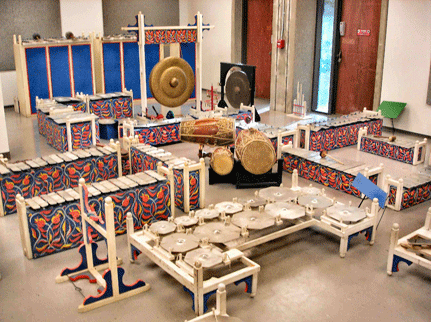
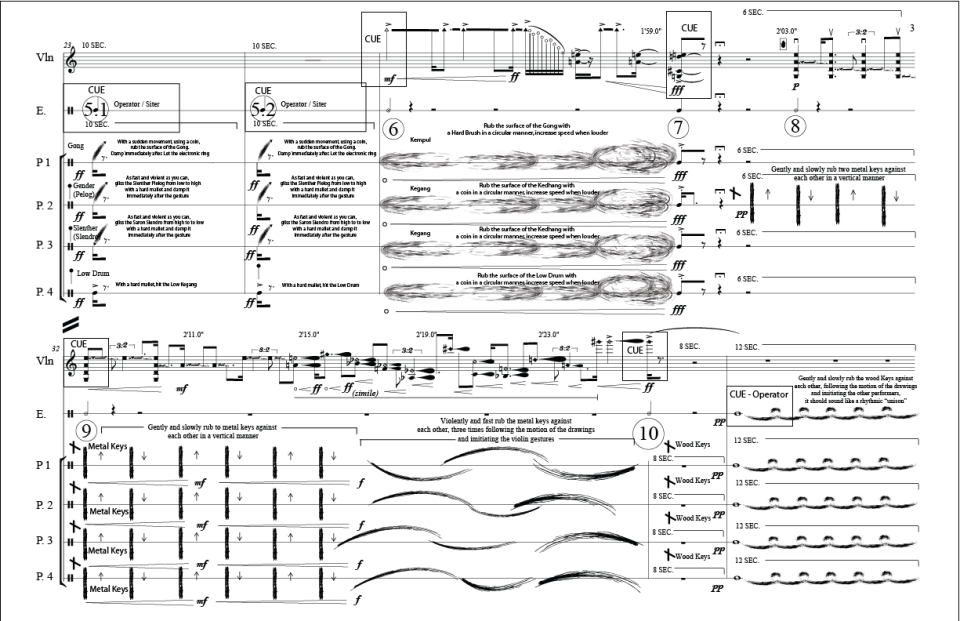
Echoic is a piece motivated by two concerns. The first one being the generation of gestures that are a result of resonance (and vice versa) and the second one is the challenge of using the Gamelan as a different instrument, and try to take a distant from the historic “weight” of such a beautiful instrument. The structure was developed using simple sounds that evolved into more complex ones, and that is precisely the driving building force; evolution. In addition, the piece tries to integrate the Gamelan as an extension of the electronics which is in constant dialogue-processing with the violin. The violin plays a soloist role in this piece but both instruments are to be processed independently in real time. The piece features several aspects that convey velocity and the idea of injection of energy to specific material that will eventually spread to the rest of the musical elements. The Gamelan also is treated as an “amplifier” of the violin ideas. The violinist (Gabriela Diaz) will control the cues for the computer and the Gamelan performers, playing a crucial role not only as a violinist, but also as a sort of conductor in the piece.
John Knowles Paine Concert Hall
December 10-11 2009
————————————————————————–
Kapsis Video Collaboration with Yen-Ting Cho
Animation: Yen-Ting Cho
Music: Edgar Barroso
(Better if listen with headphones)
————————————————–
SPECIATIONS
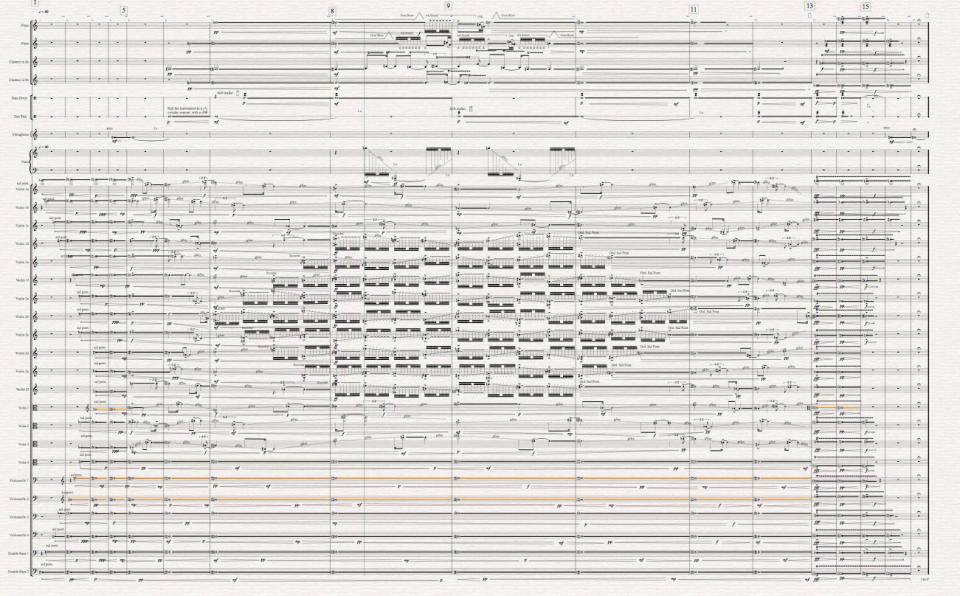
Miniatures for Orchestra.
ALLOPATRIC

SYMPATRIC
Alternative geographic models of speciation (Futuyma 1997)
Speciations are 2 miniature orchestral pieces based on the idea of the concept of Speciation. Speciation is the evolutionary process by which new biological species arise. The biologist Orator F. Cook seems to have been the first to coin the term ‘speciation’ for the splitting of lineages or ‘cladogenesis,’ as opposed to ‘anagenesis’ or ‘phyletic evolution’ occurring within lineages. There are four geographic modes of speciation in nature, based on the extent to which speciating populations are geographically isolated from one another: allopatric, peripatric, parapatric, and sympatric.
Geographic models of speciation emphasize the development of reproductive isolation between geographic population components of a species. (A) Allopatric: reproductive isolation develops between populations in physical isolation. (B) Founder Effect: reproductive isolation develops in a small population separated from the main body of the species, in consequence of the biology of small populations. (C) Parapatric: reproductive isolation develops among contiguous components of a population, in consequence of their limited vagility. (D) Sympatric: reproductive isolation develops within the “cruising range” of an existing species, in consequence of special biological properties (e.g., host-parasite specificity).
————————————————————————-
ATARAXIA
For One Percussionist
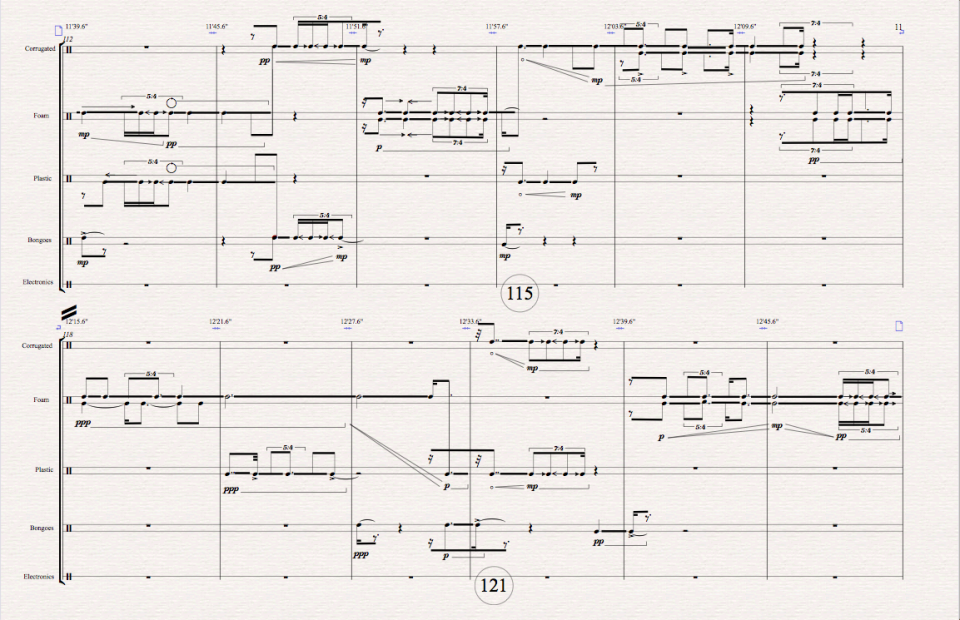
Ataraxia (ἈταÏαξία) is a Greek term used by Pyrrho and Epicurus for a limpid state, characterized by freedom from worry or any other preoccupation. The piece is about touching and permanent soft movement. Eventhough the instrumentation is full with percussion instruments, the piece is mora a meditative one. For the Pyrrhonians, owing to one’s inability to say which sense impressions are true and which ones are false, it is quietude that arises from suspending judgment on dogmatic beliefs or anything non-evident and continuing to inquire. The experience was said to have fallen on the painter Apelles who was trying to paint the foam of a horse (likely a bit of frothy saliva near its mouth). He was so unsuccessful that in a rage he gave up and threw the sponge he was cleaning his brushes with at the medium, thus producing the effect of the horse’s foam.
——————————————————————–
CATALYST
For Viola Solo
The piece is about accelerating. A Catalyst is something that causes an event to happen. It can accelerate the interaction between two objects or simply affect the way they interact in endless forms. Unlike other reagents that participate in the reaction, a catalyst is not consumed. Thus, the catalyst may participate in multiple transformations, although in practice catalysts are secondary processes. The piece takes two musical materials to interact, and then use energy as a “catalyst”. If this catalyst does change the equilibrium, then it must be consumed as the “reaction” proceeds, and thus it is also a reactant.
———–
Acoustic Version of LOGOS.
This time the musicians from the White Rabbit Ensemble will present the acoustic version of LOGOS, commissioned by Visiones Sonoras Festival. This acoustic version is for violin, cello and piano.
Eric Hewitt – Conductor
Gabriela Diaz – Violin
Ben Schwartz – Cello
Yoko Hagino – Piano
December.6.2008
Harvard University / December.06.2008
—-
LOGOS
For Clarinet, Bassoon, Piano and Live Electronics
A comission from the “INTERNATIONAL VISIONES SONORAS FESTIVAL 2008″ for the TRIO NEOS premiered in November at Morelia, Mexico. This piece is based on the text “Against image. About Poetry and Philosophy†by the Mexican Philosopher Santiago Espinosa, currently a PhD candidate at the University of Paris-Sorbonne Paris IV, and the Aristotle definition of LOGOS as argument from reason, one of the three modes of persuasión.
TRIO NEOS
www.trioneos.com
—-
Edgar Barroso Conducting
Edgar Barroso Conducting – 2008 from Edgar Barroso on Vimeo.
First rehearsal with the Radcliffe Orchestra at John Knwoles Paine Concert Hall – Harvard University Department of Music
12.12.2009
—-
ACU – 8.0 Electroacoustic Multichannel Piece

Particularly important in acupuncture is the free flow of Qi, it is commonly translated as “vital energy”. Acupuncture treatment regulates the flow of Qi, tonifying where there is deficiency, draining where there is excess, and promoting free flow where there is stagnation. An axiom of the medical literature of acupuncture is “no pain, no blockage; no blockage, no pain.” Acu is based on the idea of representing an ill sound organism full with blockages that eventually will heal by “pressing” specific points (speakers).
Listen to the stereo version of ACU:
ACU by edgarbarroso
I would like to thank the Open Source Creation Group at Harvard, my collegues in course 264 and Hans Tutschku for their thoughtful feedback in the composition process of this piece.
December.13.2008
—-
MORPHOMETRICS – Removing Translation
Electroacoustic Miniature

Morphometrics is a field concerned with studying variation and change in the form (size and shape) of organisms. This piece is about using some of the methods of morphometrics and applying them to sound structures. These include measurement of lengths and angles, (pitch and gesture), landmark analysis (spacialization) and outline analysis (dynamics and timbre). The first method is removing translations. These are needed in order to compare shapes (sounds), the sounds need to be fitted into a frame of reference that places them in the same virtual space. The second method is to use the “centroid” – that is, the “centre of mass” of the sounds, this centroid is calculated for each new sound and translated to the original sound. The result of these comparisons and translations is the core of the structure and music ideas for this piece, this analysis will generate a graphical score and will serve as a guide for the structure of the piece.
–
MORPHOMETRICS meets Biobinaria
–
“K A P S I S”
For Flute Solo
Kapsis (Solo Flute) / Mario Caroli – FLute / Edgar Barroso – Composer from Edgar Barroso on Vimeo.
“Kapsis” (Sea Star)
The piece is based in the Prehispanic Mexican Legend “Kapsis” from an unknown author. Kapsis daughter of the Haas chief was surprised immobile and silently watching the sky each night on the beach to contemplate the sky. Kapsis was in love with one particular vastlk (star). One night she returned to the sea, and anxiously looked at the sky in search of the beautiful vastlk. Suddenly, she envisioned how her favourite star was falling from the sky into the sea. Frightened, she ran to the nearest canoe; paddling, she came to the place where he had seen the falling star, and was thrown into the water to rescue her, but in its rapid decline, she fell on a rock and died. Xtamosbin, god of the Oceans, saw the tragedy, and had their hands on the lifeless body of the young Kapsis turning her instantly into a beautiful star sea.
Harvard University 24.05.2008
USA
_________________________________________________________
“AION” (2006) 14:40
For Flute , Clarinet, Oboe, Basoon, Percussion, Piano, violin, viola, cello, double-bass

The word AION is derived from the koine Greek word ( αίών ) which at one point meant “a period of time”, in Greek myth AION was the god of the ages (time) also known as Chronos. The subjective perception of time is one of the main elements of which are alluded to in this work. The piece deals with three time aspects: continuity, interruption and suspension. Aion constantly explores the sensation of vacuum that arises when the music “freezes” and “thaws” as an excuse to continue to the next musical idea. The core of the piece (the opening) consists in a dense mass with similar rhythm patterns for all the instruments which are “captive” in a rather active internal structure within short periods of time. The constitution of the piece is formed by the used of restricted range of materials, phrasing and proportions. These elements are derived from speech analysis in different native languages from the south of Mexico. The objective of the instrumentation is the prolongation of these gestures through the transposition of complex counterpoints and the richness of the ensemble timbre and energy. It’s a piece over the frailty of one instant, one moment, one musical AION.
1rst Prize at the International Jurgenson Composition Competition (Moscow)
Premiered on june the 3rd of 2007 by the Cantus Ensemble Zagreb at Ensemblia 2007
AION  by edgarbarroso
03.06.2007 Mönchengladbach, Germany
_________________________________________________________
“The Life of a Fly”
Short Animation Film by Yen Ting Cho – Visuals / Edgar Barroso – Music
Harvard University 10.15.2008
_________________________________________________________
Searching your Synesthesia (2005) 14:35″
For Flute, Clarinte, Cello, Piano and Live Elecetronics
1rst Prize at the International
LIVE ELECTRONIC MUSIC COMPETITION 2006 – Harvard
SEARCHING YOUR SYNESTHESIA – for flute, cello, piano and live electronics by edgarbarroso

Synesthesia: faculty to experience sensations of a particular sense modality, provoked by a different one. The piece tries to literally “search” the sound Synesthesia of the audience and the performers. The PD live electronics is used as a tool to “expand” the instruments capabilities, and generate sounds and sensation of space provoked by a different source and location. The score is written in a progressive structure that is constantly using or recycling the acoustic and electronic material that it is transformed in several ways during time. The search for a very clear and programmed interaction between the acoustic players and the computer player is crucial, although there are moments of controlled indeterminacy.
Harvard University
Stephen Drury, conductor
Patti Monson, flute
Gary Gorczyca, Clarinet
David Russell, cello Edgar Barroso, Live Electronics
ES TU DANZA (2004) 10:12″
For Symphonic Orchestra
“Es tu Danza” for Symphonic Orchestra by Edgar Barroso. Conducted by Jose Luis Castillo with the Guanajuato’s University Symphon from Edgar Barroso on Vimeo.
Orchestral work composed in 2004. The work was inspired by the thought of Erich Fromm (1900-1980), psychologist and social philosopher of German origin that mainly explores the interaction between psychology and society, and dedicated a good part of his work to deal with the phenomenon of the alienation of the modern man in the context of the world that surrounds it. The title Is your dance is related to the well-known phrase of Erich Fromm: I am you, looking for to create, by means of the use of some psychological and somatic references like the breathing and the heart rate. This was the first parameter search to the writing of the work. This piece, tries to obtain this connection by means of a orchestration of resistances, of sonorous weave masses or sonorous blocks to the solitary intervention of extreme pitch ranges. As far as the harmonic system, it is a work in which a series of matrix of 5 notes were used to multiplied and basically some resonances were delimited.
_________________________________________________________
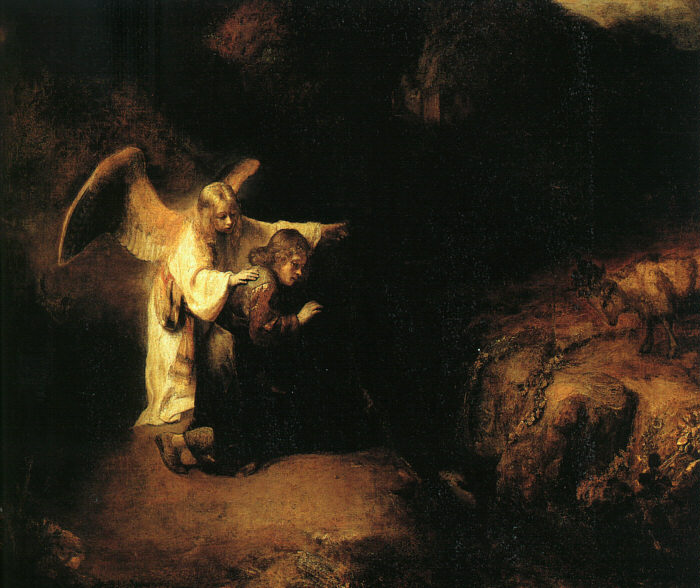
“M I S E R E R E”
For 12 Mix voices a capella
Painting: The vision of Daniel by Willem Drost
Choral Works (fragments) Náhuatl texts.

“Tenamiquiliztli” for six voices capella chorus
“Cauhucuicatl” for six voices capella chorus
“Ma ye ya nican” for six voices capella chorus
January 12, 2008 Cambridge. (USA)
_________________________________________________________
La Percusión de tu Frecuencia (2007) 12:10″
For Flute and Live Electronics
This piece is about breathing. The idea is to represent a biological process in which all listeners could be familiar or identified with, and use this element to communicate a musical idea was one of the main creative challenges during the composition of the piece. A relation between the frequency and the rhythmical patterns (represented as percussion patterns) was established by considering that the higher the frequency, the higher the tension in the rhythmical structure and vice versa. In this way the piece starts constructing a sonorous weave that responded to the necessities of the breathing of the performer, and at the same time affects the formal structural parameters of the piece. This piece works a lot with perception and memory of the listener, by using some events that are always repeated throughout the piece with constant intervallic and gesture permutations. This work is technically and musically very demanding for the performer, whom has to deal with a score of great complexity and in addition to that, be in charge of the synchronization of the electro acoustic part that he controls with a MIDI pedal that is triggering the electro acoustic sounds. The electronics are based on the idea of gesture integration of sonorous objects to the flute material. This piece is then, a desire to establish a direct interaction between: breathing, frequency (intervals), rhythm (percussion) and technologyin a same unified music environment.
La Percusión de tu Frecuencia – AUDIO
La Percusión de tu Frecuencia – PDF
FLute: Jessi Rosinski
Concert at Harvard University
14.12.2007
Cambridge, MA
_________________________________________________________
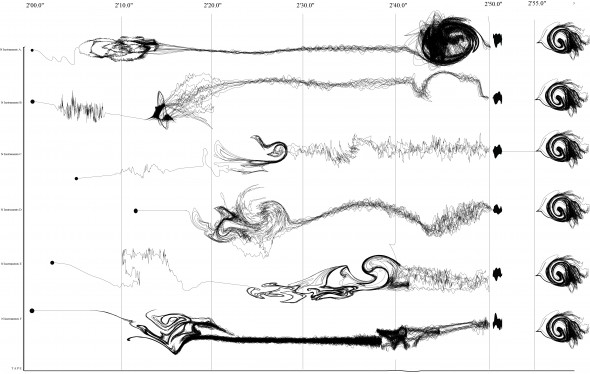
OME – IC – AINI
Three pieces for improvisation
–
“AINI”
For Ensemble
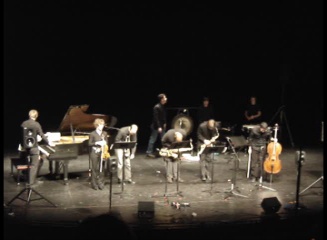
Piano: Ulrich Kreppein & Bert Van Herck
Violin: Hillary Zipper
Trumpet: Peter Gilbert
Saxophones: Michael Heller / Danny Mekonnen
Percussion: Gabriele Vanoni, Steven Li and Keith Fernandez
Space: Hans Tutschku
Cello and Tape: Edgar Barroso
Live at the Harvard College Theater – 23.05.2008
Cambridge, MA
Live at the Harvard College Theater – 23.05.2008
_________________________________________________________
“Pieza para Tiza” (Short Film animation)
This short film was made by Karina Letelier, Marina Lobo, RocÃo Naranjo, Triana Raya.
Music and sound design:Edgar Barroso
Barcelona, 2006
_________________________________________________________
IOD (2007) 14:40″
For Saxophone tenor and Live Electronics
Iod is the Greek root for violet. Dedicated to the saxophonist Xelo Giner, Iod searches the relationship between the electronics and the saxophone that is focused on highlighting sounds from the instrument, and extend them as fas as timbre and dynamics is concerned. The outline of the piece is planned so that the temporal distance between the interactions between the saxophone and electronics are actually quite short. The strategy to achieve this relationship in the piece to compose it as a piece of piano, saxophone which the right hand and the electronics that represent the left hand. In this way the different interactions between the saxophone and electronics create lines and counterpoint relations that are constantly talking to each other.
This patch was done in collaboration with programmer Matteo Sistisette (Italy). The piece is dedicated to Xelo Giner
Hydra Concert – Philip Stäudlin/Sax – Edgar Barroso / Electronics
14.12.2007
Cambridge, MA
_________________________________________________________
CYT (2007) 09:00″
Acousmatic 5.1 Multichannel Piece
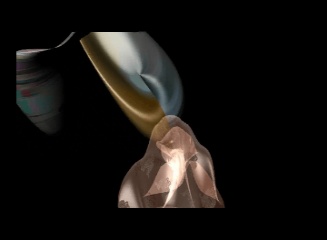
Cyt is the greek root for cell, the human body is a system made up of discrete organs and tissues, however, individual cells that compose these essential tissues are often short-lived. The skin covering our body today is not really the same skin we had a month ago. The piece follows this principle in the sense that it is constructed with “sound cells” that have specific functions and are constantly regenerating to sustain “life”. The sounds are classified depending on the potential of self-renewal, proliferation potential and the degree of differentiation. In addition, the numerical balance of this sounds, will determine the way in which musical ideas interact, and the variations that could emerge if that fragile balanced is changed.
Cervantes Institute of Berlin
23.03.06 Berlin, Germany
_________________________________________________________
El Sigilo de tu Elipsis
For Cello and Live Electronics_
Watch the concert in Google Video
Pantin Conservatory.
Hughe Vincent – Cello
Edgar Barroso – Live Electronics
22.05.2007 Pantin, France
_________________________________________________________
TAU (2005) 05:30″
Acousmatic 5.1 Multichannel Piece
Pubished by Lanus University – Argentina
The piece is based on the metaphoric idea of one of the six components that form leptons, called Tau. This particle, in spite of being considered as a lepton, that literately means “slight mass” has more than three thousands times more mass than an electron. From that idea I wanted it to make an analogy with the sounds, to represent isolated elements that can exist with no need of company of other particles, but that will possibly have much more weight than another phenomena, which at first, would seem dominant, and perhaps represent sound particles that give sensation of fighting for its own sonorous space is a metaphor to demonstrate that a particle can be heavier, than complex figures (Not every thing is the way it “sounds”). But eventually they have to figure out a way of sharing the surround field. The piece was made in the Laboratory of Audio of the University Institute of the Audio-visual at the Pompeu Fabra University between january an march of 2005. Barcelona. Spain. Small Fragment Audiovisual:
Yen-Ting Cho Visuals / Edgar Barroso Music – Harvard University (2007)TAU – AUDIO
_________________________________________________________
ODD (2006) 10:35″
Acousmatic 5.1 Multichannel Piece
Commissioned by the DAAD for the Inventionen 2006 Festival, ODD was conceived based on the SMS tools, which are a set of techniques and software implementations for the analysis, transformation and synthesis of musical sounds, developed by Xavier Serra an his team at MTG (Music Technology Group). The textures of the piece are built from “residual” components which after a process of constant transpositions create very dense no-pitch sound masses. In a sense, ODD is a trio, having three recognizable sound sources, a violin, a set of percussions and a female voice, which are surrounded and interrupted by this residual, permanently moving textures. The spacialization of sound was founded on the geometrical concept of odd functions that are symmetric with respect to the origin, meaning that its graph remains unchanged after rotation of 180 degrees about the origin. The work´s structure is based on four clear moments defined mainly by its background sonic textures, in its internal construction it is also the result of selecting graphic information given by the SMS analysis and subjectively interpret it as a “score” of the incoming musical events. ODD used the SMS tools as a “prism” that can disperse a “light” (sound) wave.
ODD by Edgar Barroso/ For 5.1 Electroacoustic Piece by edgarbarroso_2
28.05.2006 Berlin, Germany
_________________________________________________________
DUX (2006) 7:45″
From Latin “leader”, four sounds conforms the leaders of their legions of sub-sounds. The piece begins with a single sound, that “hauls” to a series of others that are forming and connecting the music ideas throughout the piece. The form is determined by this same criteria, is a piece divided in four clear sections, in which each dux sound has a protagonist role, these sounds are formed by two recordings, cello and contact microphone and the other two are generated by synthesis. The creation of sub-sounds are mainly done by re-synthesis and audio processing changing their location within the space.
_________________________________________________________
“Ensueños¨ Video Art short film made by Edgar Barroso, Ricard Marxer, Rebecka Viró and Erick Arreola. ActrÃz: Matxalen de Pedro
Muestra de Arte Digital MAD04, CaixaForum Barcelona, 2006
_________________________________________________________
Tu Soplo que transporta (2005) 12:48″
For Clarinet and Live Electronics_
The piece is based on the metaphor of approximation-silence and the process of breathing. We only hear us breathing when we are quiet; and certainly we can only listen to somebody else breath when we are very close, perhaps in intimacy. With the used of live electronics and a wind instrument the material is transformed in different degrees, led away by the used of sound spectrum of the clarinet and a second element that will interact in real time with the performer generating a strong relation between an amplitude threshold that will settle on the amount of electronic material that is getting out from the computer and music score. The complete interactive part is programmed in PD (Pure Data). In this piece the performer triggers sound samples and real time procedures with the used of a switch and volume MIDI foot pedal. The piece requires a second performer dedicated to the electronic part to control the subjective parameters and incorporate some brief moments of improvisation. The piece was produced in November 2005 at the Audio Laboratory of the University Institute for Audiovisuals from Pompeu Fabra University in Barcelona.
Clarinet: Naum Monteverde
_________________________________________________________
